
Last updated: 2026-10-12
Tennessee Foundation Repair connects Tennessee property owners with participating contractors for foundation crack repair. Plenty of foundation cracks are cosmetic: concrete shrinks as it cures, and hairline cracks are common in poured walls. Others are the visible end of a settling footing or a wall being pushed by wet soil. The repair depends on which one you have, and that takes an on-site look.
Types of foundation cracks
Location, direction, and width tell a contractor where to start looking. They are clues, not a diagnosis:
- Hairline and vertical cracks in poured concrete: often shrinkage cracks from curing. Commonly sealed if they leak.
- Diagonal cracks: running from a corner or window at an angle can point to one part of the foundation settling more than another.
- Stair-step cracks in block or brick: following the mortar joints, often linked to settlement or soil pressure.
- Horizontal cracks in a basement wall: often linked to soil pressing on the outside of the wall, especially with block. Treat these as structural until someone qualified says otherwise. See bowing wall repair.
- Cracks wider at one end, or with one side offset: suggest movement and deserve a closer look.
Repair methods for foundation cracks
The method depends on the wall material and whether the crack is still moving:
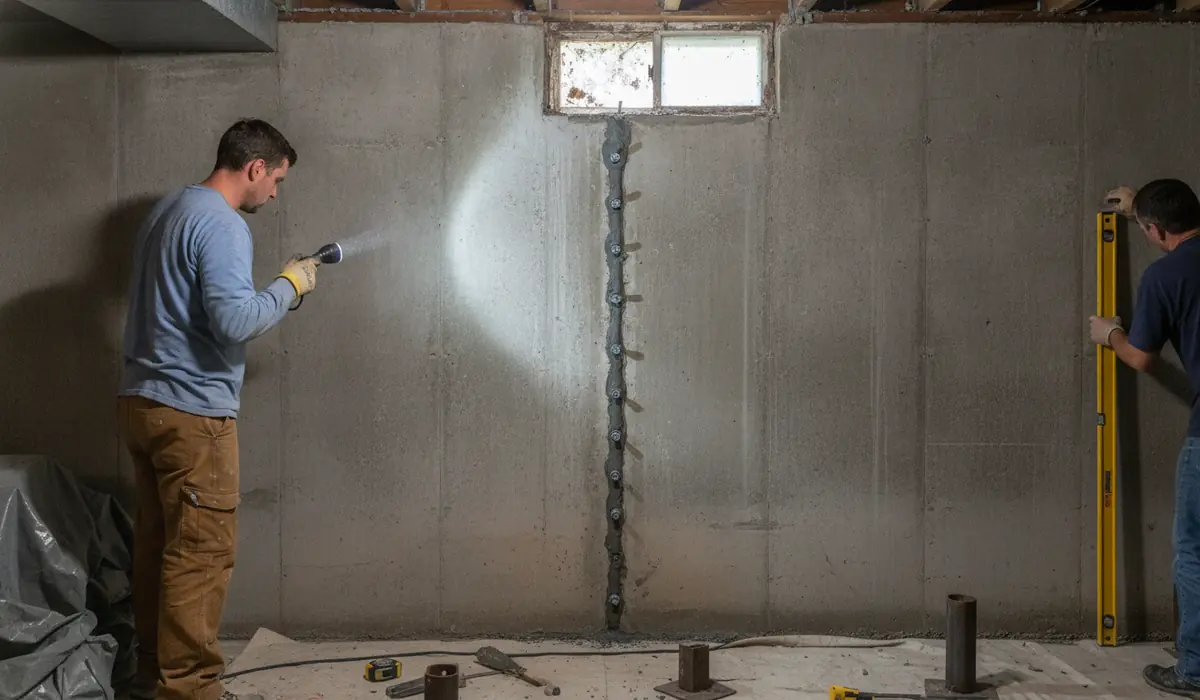
- Epoxy injection: bonds the two sides of a crack in poured concrete. Used where the crack is stable and some strength across it is wanted.
- Polyurethane injection: flexible foam that seals a crack against water; common for leaking, non-structural cracks.
- Carbon fiber stitches or straps: reinforce across a crack or along a wall.
- Repointing or rebuilding: for block and brick, replacing failed mortar or rebuilding a damaged section.
- Fixing the cause: if the crack comes from settlement or wall pressure, sealing it alone will not hold. That means piers, wall anchors or braces, or drainage work first.
Watching a crack before you decide
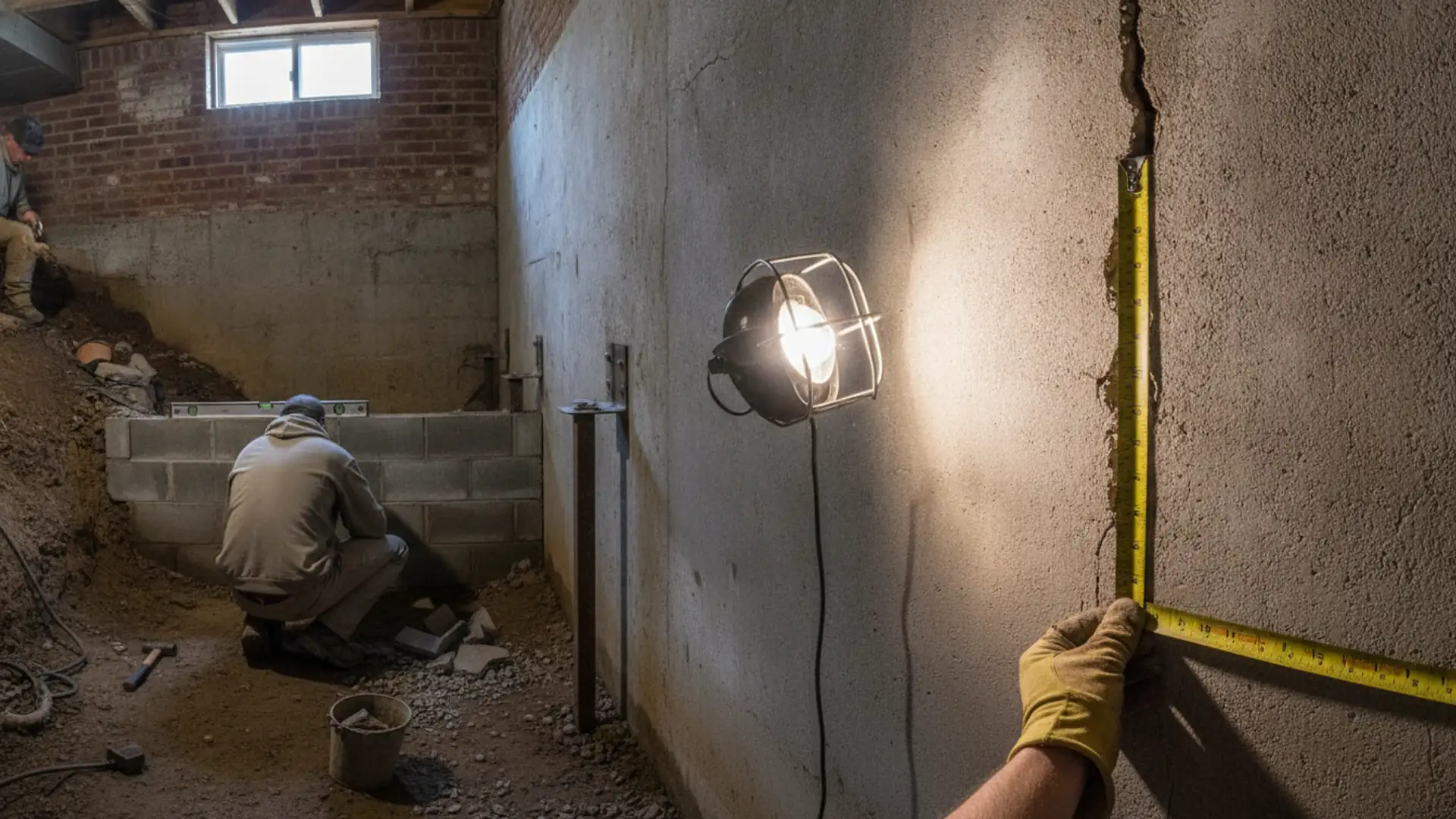
For a thin, dry crack, monitoring is reasonable. Photograph it with a ruler for scale, mark the ends with a pencil and date them, and check again after a few months and after heavy rain. A crack that stays the same is a different conversation from one that grows. Do not fill or paint over a crack before a contractor sees it; that hides the evidence.
Cracks and water
A leaking crack is a water problem first and may or may not be structural. Waterproofing and basement drainage are related services that may be handled by different contractors and may not be included in every referral, so say clearly when you call whether you have water, movement, or both.
When a crack is worth a professional look
- It is horizontal, or the wall around it bows inward.
- It is wider than about a quarter inch, or wider at one end.
- One side of the crack sits out of line with the other.
- It has grown since you first noticed it.
- It appeared along with sticking doors, sloping floors, or gaps around windows.
- Water comes through it when it rains.
What foundation crack repair costs
HomeAdvisor's June 2026 data puts sealing foundation cracks at $250 to $800. Cracks caused by settlement or wall pressure cost more because the cause has to be fixed too: piers run $1,000 to $3,000 each, and bowing walls $4,000 to $12,000, per the same data. Waterproofing runs $2,000 to $7,000.
- Number and length of cracks.
- Wall material: poured concrete is usually injected; block and brick may need repointing or rebuilding.
- Access: finished basement walls may need drywall removed.
- Whether the cause also needs repair.
What you can do right now
- Photograph the crack with a ruler or coin for scale, and date it.
- Mark both ends with a pencil so you can tell if it grows.
- Note whether it leaks after rain.
- Leave it unfilled until a contractor sees it.
- Call and describe the crack: direction, width, wall material, and any water.
Questions to ask about crack repair
- Do you think this crack is structural or from shrinkage, and why?
- Is it still moving? How can you tell?
- Epoxy or polyurethane, and why that one for this crack?
- If the crack is a symptom, what would fix the cause?
- What does the warranty cover if the crack reopens or leaks?